
Buying Your Next Studs
Quality Studded Belts - Part 5
Just because a belt is expensive or looks good doesn’t mean it is well made and will last. Before you buy your next studded belt look at all the small details that have gone into the production. Consider how much you are spending, how often you will wear the belt and how long do you expect it to last? Is it a daily use belt or a once a week gig belt? A cheap belt that will only be used 3 times a month will probably look good and could last a year, but if worn daily it could be in the bin and replaced within 2 months. If you think about it, a belt that is worn for 14 hours every day will get a lot more abuse and use than your favourite jeans or t-shirt that only get’s worn a few days each month.
In the final blog of this series we will sum up what to consider when you buy your next studded belt and what you should expect from it.
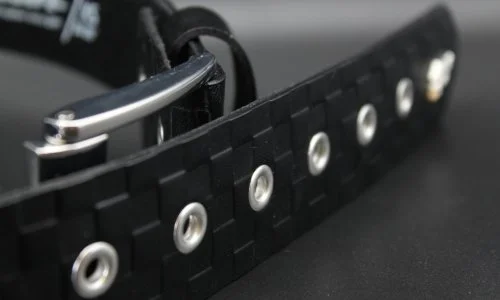
Eyelets
We all know what happens to a belt after it has been worn for a few weeks, especially if we wear it tightened firmly. The fabric around the holes where the prong goes starts to stretch, distort and eventually split. It looks bad and means the belt no longer fits propery. Always look for metal eyelets for a longer lasting belt.
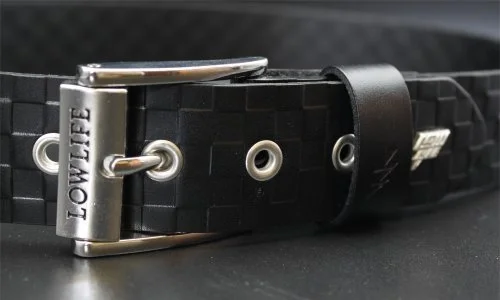
Buckle
Most belts are made by factories that have a stock design with stock buckles. Many brands order these standard stock belts, add a quick bit of branding and then sell it at a high price. No effort is put into making their belt unique. Branded buckles involve time and money to create. Look for a belt that has a unique branded buckle, a sign that the brand is truly invested about creating a unique product.
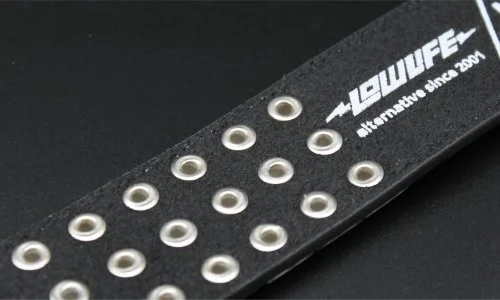
Stud Fixings
How the studs are connected to the belt shows whether the brand has opted for the more expensive fitting technique. The old two prong studs are cheap to make and fit but could end up costing you a new pair of jeans or even causing an injury in the long run. The newer rivet style stud fixing is more expensive to produce and fit but are better and safer.
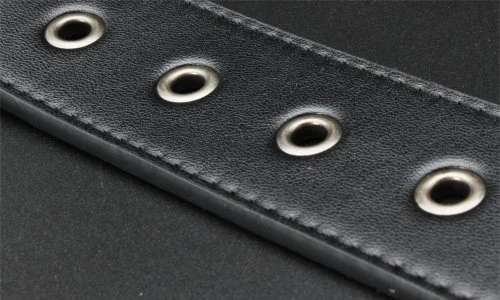
Stitching
If the belt isn’t made from full grain leather then it will consist of multiple layers of material and a PU coating. Over time these layers will come apart unless they are stitched. Stitching a belt really adds to the cost of production, so look for a belt that has been stitched all around for a longer lasting finish.
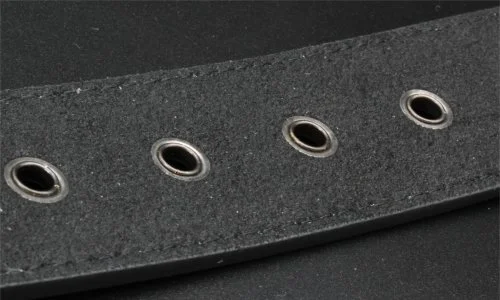
Material
The material used to make a belt is important but often not given the attention that it deserves. If you want a vegan belt then there isn’t much to consider, as long as it is vegan. If leather then check the quality and type of leather used. A studded belt is almost never made from full grain leather as it is too stiff for studs and studs hide the leather grain. Split leather is the next layer and is a hard wearing material while bonded leather is the cheapest form of leather, ofter referred to as “Genuine Leather”.
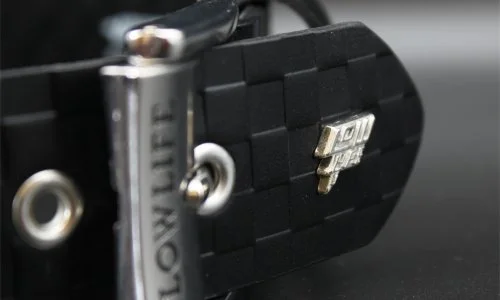
Branding
How much branding is on the belt? If there isn’t much branding then the more basic and “off the shelf” the belt is. This in turn means the less money and time they have invested in the belt production. The more branding a product has then simply the more confident you can be that the brand wants to put their name to a quality product. The branding on a product really highlights if they feel it will positively promote their reputation. A brand would not want to add their name to a cheap product that is of low quality and will not last, that is not good for business!
Summary
There are many considerations when buying a new studded belt and as with all things in life, you get what you pay for. We all need to balance the cost vs the lifespan when we buy anything these days. A cheap throw-away belt might suit your purposes if you don’t want to spend much. However, spending 2x as much on a belt that last 3x as long nearly always makes sense. Consider all the points above when comparing belts and remember, just because a belt is expensive doesn’t mean it is quality. We recently reviewed a very plain belt made by a well known fashion brand and found that although they charge £35, it was a basic non-studded “Genuine Leather” belt with a subtle pressed logo which could be made for a fraction over £1. When buying your next studded belt, look for all the points above to get an idea of the care and commitment put into the belt design and production.
