
Quality Studded Belts - Part 4
As well as the obvious buckle, a belt should but often doesn’t have other metal fixtures and fittings. On a studded belt there would obviously be studs, but there are other accessories that can be added to a belt to impove durability and add to the styling. Our previous blog in this series highlighted the main types of buckle design that is mostly found on studded belts. In this blog we will discuss the additional furniture on a belt that can give a clue to the quality of the design. A belt without these additional fixtures will often be of inferior quality, made with standard factory parts found on a million other belts and with a much shortened lifespan.
Eyelets
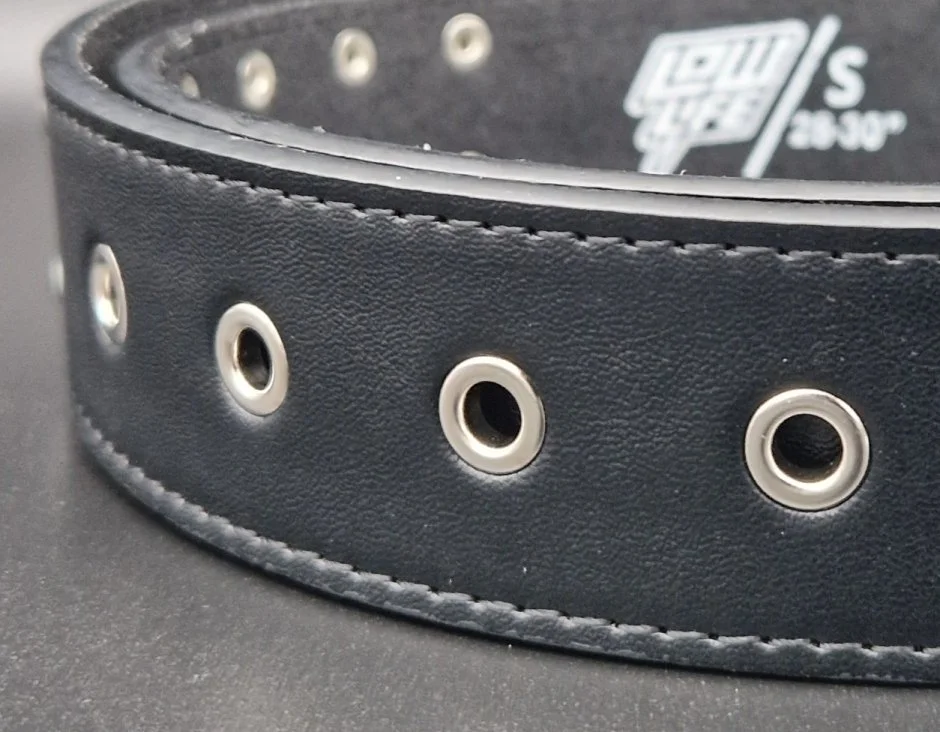
We all know what happens to a belt after it has been worn for a few weeks, especially if we wear it tightened firmly. The fabric around the belt hole where the prong goes starts to stretch and deform. This doesn’t look great and means the belt starts to become looser than we want. Very simply, for a small extra cost, metal eyelets can be inserted into these holes to stop this from happening. The eyelet then maintains the shape of the buckle hole and also adds to the visual style of a studded belt. A very small additional cost to manufacture the belt but this is most often overlooked by many brands that make cheaper belts.
Buckle Fixings
There is always less cost to simply sewing a buckle onto the end of a belt, rather than paying for poppers and fixings to be made and fixed in place, so a lower quality belt will often not allow the buckle to be changed. This means that if a buckle becomes faulty then the entire belt becomes unusable. However, it also means that when you want to change the most visible part of the belt for another style, you can’t!
Stud Fixings
Last, but most importantly, we come to the main event, the studs added to alternative fashion belts that stand out from other more conventional plain belts. Studs come in all shapes, sizes and colours, but in this article we will concentrate on how they are fixed to belts.
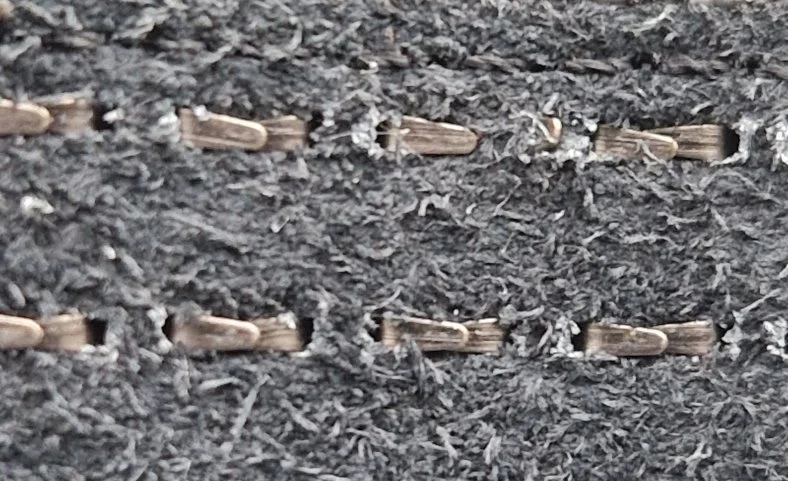
For many years studs were and continue to be attached to belts using the sharp legs on the back of the stud that are pushed through the strap and then bent over. This is how most studded belts have been made for a long time as that is what the factories produced. The problem with that type of stud fixing is that over time, as the belt is flexed from being put on and taken off, the sharp legs of the stud bend out and eventually become a hazzard, damaging the clothing and potentially scratching the wearer. This is less of a problem on PU belts and cheap bonded leather belts because the softer material does not bend the metal quite so easily.
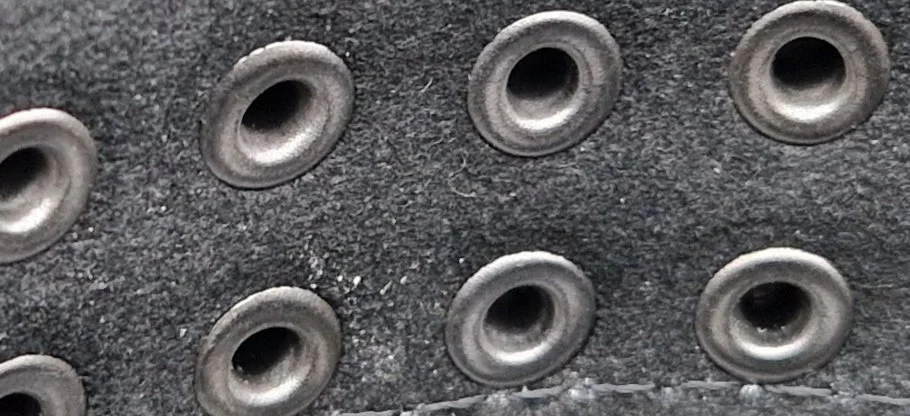
Over the past few years, dedicated belt brands have invested in new moulds for safer studs and factories are now starting to phase out the old leg design for the new rivet fixing stud. These are slightly more expensive to produce as they contain more metal and the process to fix them to the strap involves an extra step of punching a whole through the material. However, the end result is a far safer stud that is more secure and slightly heavier.
Branding
The branding on a product really highlights the attention to detail that a manufacturer puts into their products and how much they want to be associated with that product in the longer term. A brand will always wish to add their logo or name to products that they feel will positively promote their reputation. A brand would not want to add their name to a cheap product that is of low quality and will not last, that is not good for business!
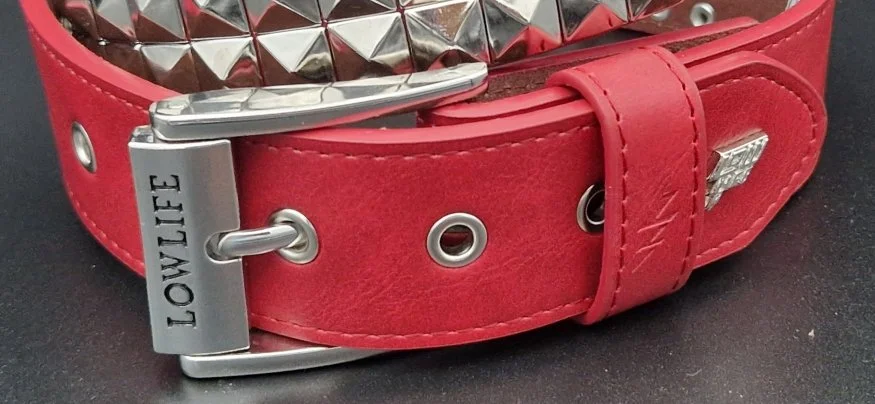
A belt has many potential ares where branding can be included if a company is prepared to spend the money to make the moulds and tools required. Judge the commitment to making a quality belt by whether the brand really wants to put their name to it. The buckle, loop and tip are all prime locations for a brand to put their name and thereby their reputation on the line.
Summary
Just because a belt looks good doesn’t mean it is well made and will last, look at all features of the belt. First, inspect how the studs are attached to the belt and try to buy a belt that uses the newer rivet fixing method. Look to see if the belt has been made with metal eyelets to stop stretching of the belt holes and consider if the buckle is replaceable. Finally, look at the branding on the belt. Is it a belt that the manufacturer wants to add their name to, or is it an anonymous item made from standard factory parts? These are all clues to the care and commitment put into the belt design and quality.
In the final blog of this series we will sum up what to consider when you buy your next studded belt and what you should expect from it.
